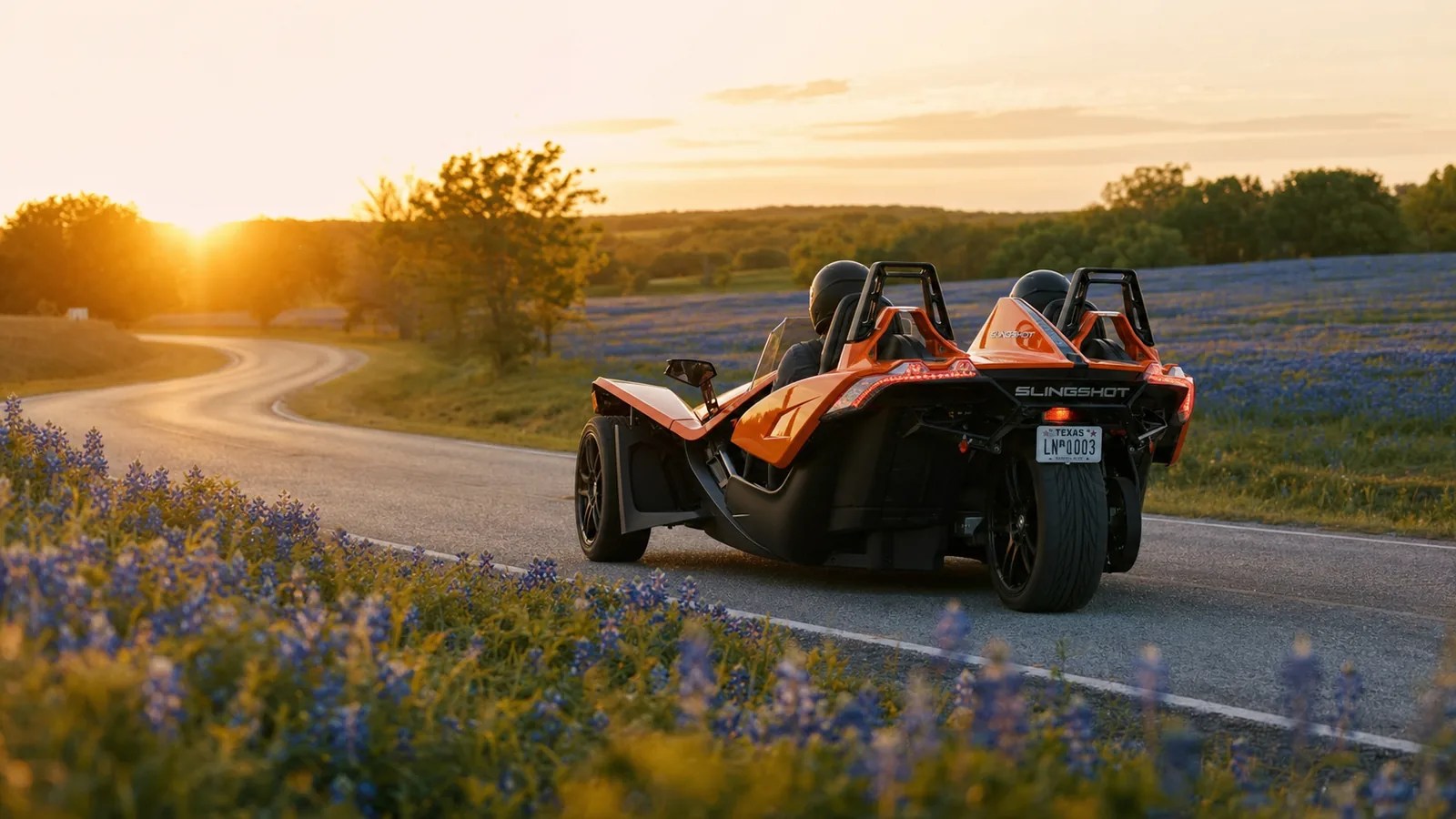
Can You Drive a Polaris Slingshot on the Highway? Interstate Speeds, Wind and Comfort
Yes — a Polaris Slingshot is fully legal on Texas highways. It's the real-world experience — wind, low seating, semi-truck spray — that's worth knowing before you plan a trip that includes one.
Is It Legal?
Yes. A Slingshot is titled and registered as a motorcycle-class autocycle under Tex. Transp. Code §501.008, and nothing in Texas law singles out autocycles for a highway restriction the way it restricts, say, low-speed vehicles. See our full street-legal guide for the complete registration picture.
What Highway Speeds Actually Feel Like
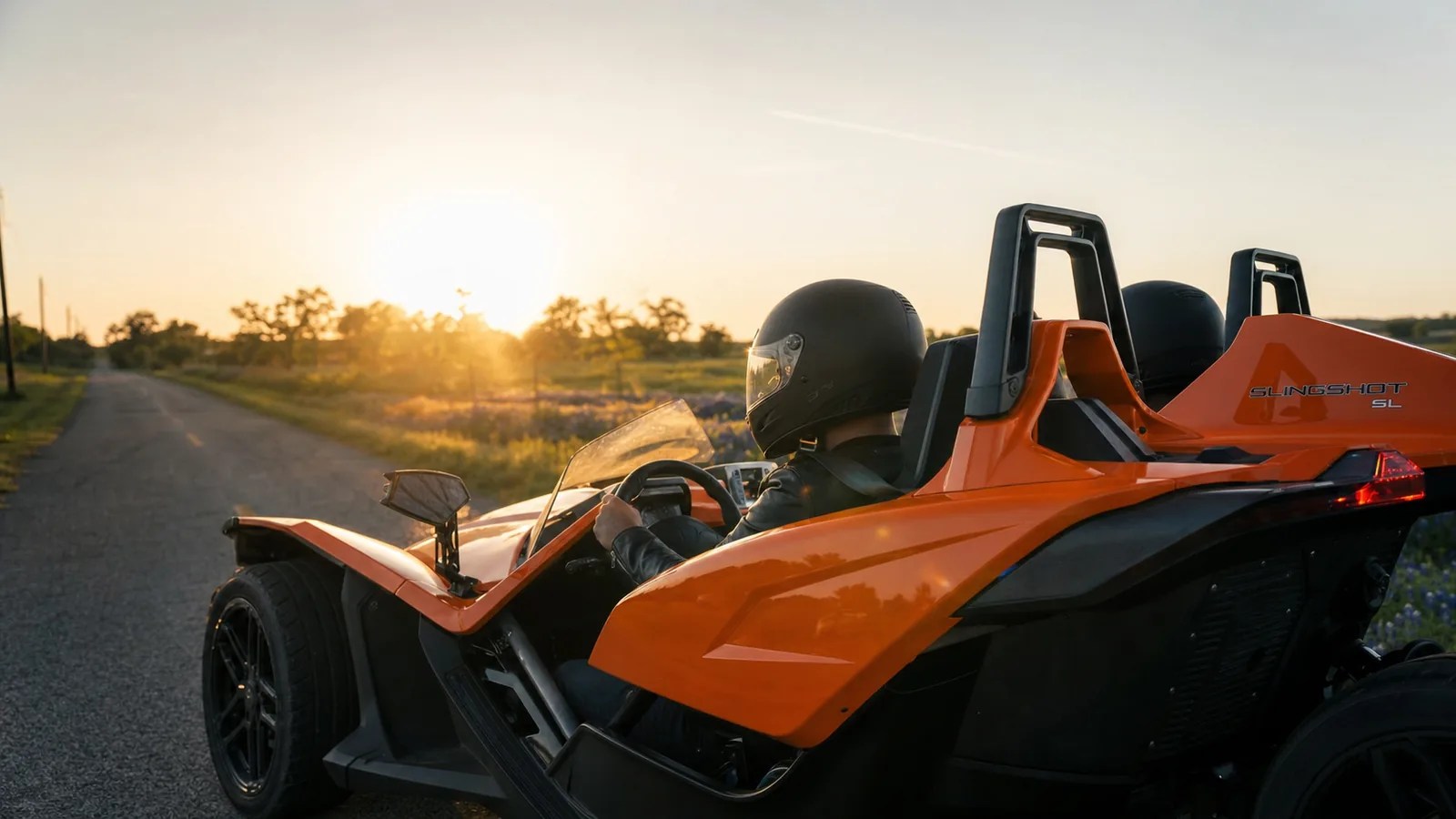
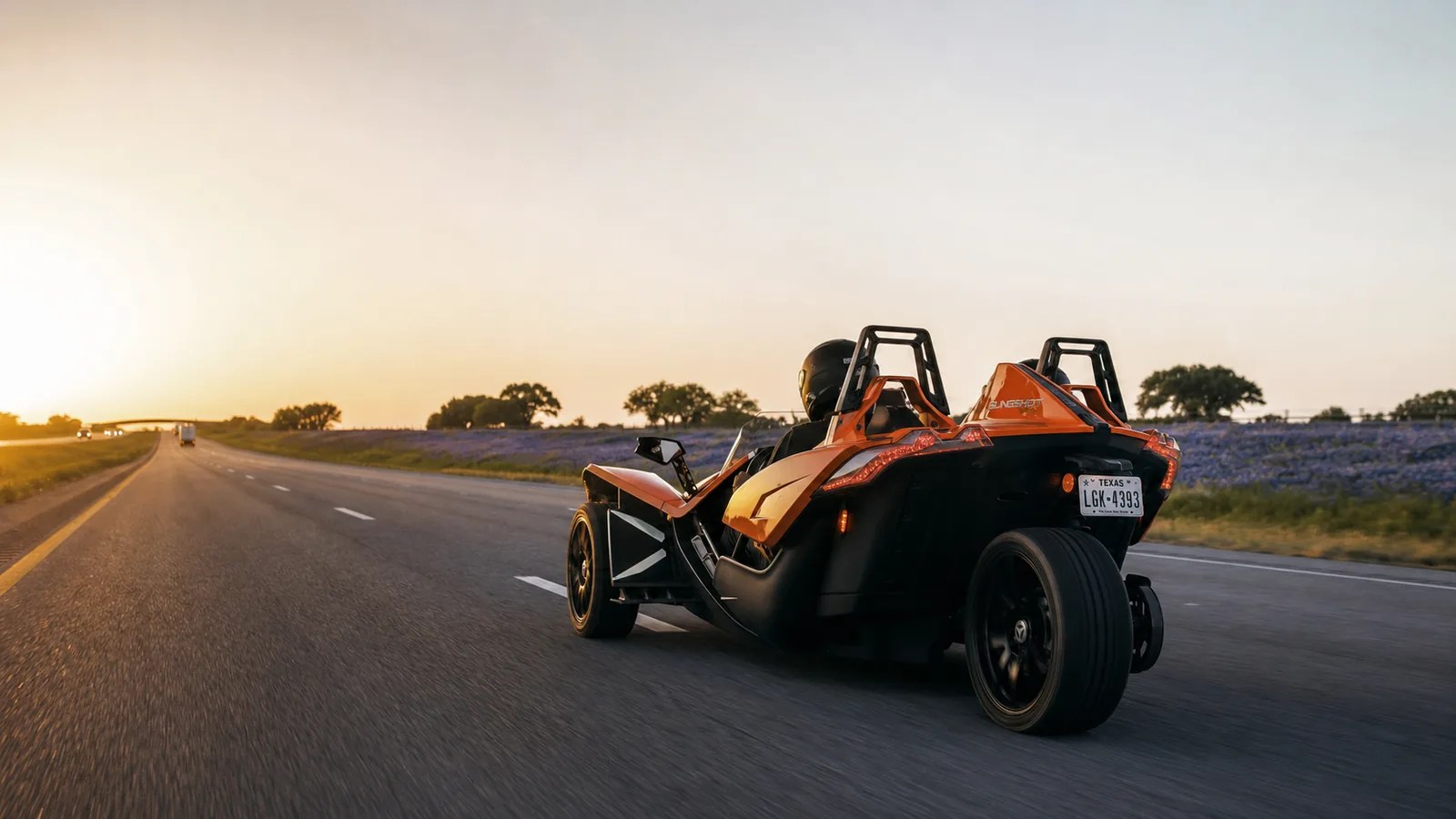
At 65–75 mph in an open cockpit, wind is the dominant sensation — there's no windshield or roof softening it. Yahoo Autos' two-week Slingshot review describes "razor-sharp steering" and notes the low seating position means the vehicle "transmits every road imperfection" straight to the driver. It's a genuinely different sensation from a car at the same speed, not necessarily a worse one, but not something to be surprised by.
Braking and Following Distance
A rental-review thread on BobIsTheOilGuy describes Slingshot braking as behaving "more like a motorcycle" than a car — the practical takeaway is to leave more following distance than you would in a typical sedan, especially at highway speed.
Semi-Truck Spray and Crosswinds
Low seating height and an open cockpit make a Slingshot more affected by semi-truck wake and crosswinds than a car. Practical advice: avoid lingering directly beside a semi longer than necessary, and give yourself extra lane-position margin on windy days.
Why Our Guided Routes Skip I-45
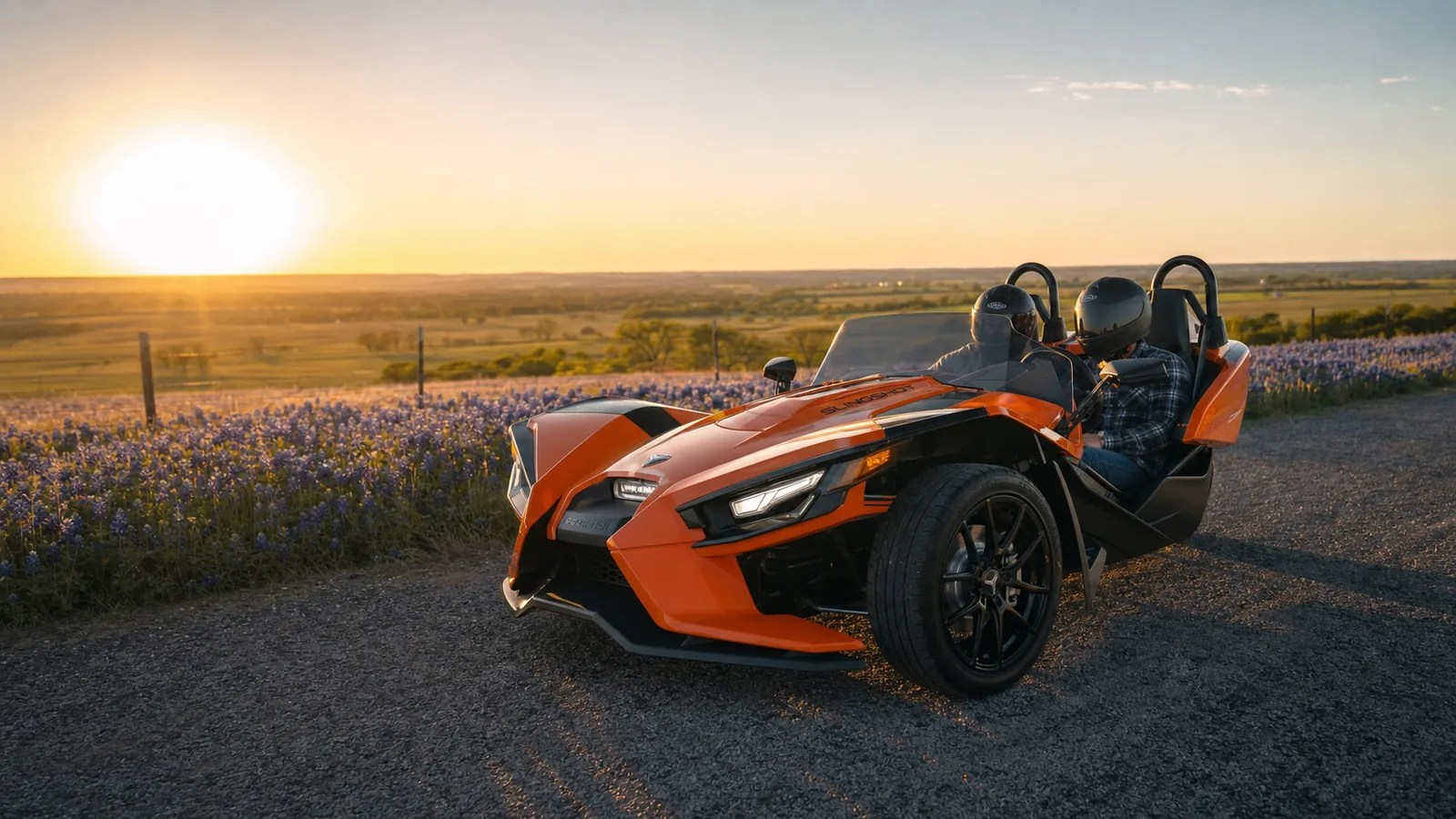
Our guided rides never use I-45 — we route entirely on the Bluebonnet Trail back roads instead. It's not a safety workaround; it's simply the better ride. None of the highway downsides above, and the scenery is dramatically better than a Dallas-area interstate.
If You Do Take One on the Highway
Eye protection is non-negotiable at highway speed — sunglasses or goggles, not just squinting. Layers help with wind chill even on a warm day. Curious about performance figures like 0–60 times by trim? That's covered on our vehicle specs content, not here — this page is about how the drive feels, not the numbers.
Frequently Asked Questions
Can you drive a Polaris Slingshot on the highway?
Yes — it's fully legal on any Texas highway, the same as a car.
Is a Slingshot safe on the freeway?
It's engineered with ABS, traction control, and electronic stability control, but the open cockpit and low seating mean wind and semi-truck spray are real factors to plan around — not a reason it's unsafe, just a different experience than a car.
How does a Slingshot handle wind on the highway?
Noticeably — there's no windshield or roof to block it, so expect real wind exposure and some buffeting, especially in crosswinds or near larger vehicles.
Try Our Back-Road Route Instead
Read the complete Slingshot first-timer's guide, see the back-road route we actually drive, or try the 1-hour Drive & Go — no highway required.
Sources: Yahoo Autos, BobIsTheOilGuy rental review thread.
Tags
- #bluebonnets
- #first-timer guide
- #highway driving
- #polaris slingshot
- #wind buffeting